

Artemisia Gentileschi’s paintings stand apart in the Baroque era for their emotional intensity and physicality. While many artists used drama to elevate saints or gods, Gentileschi used it to convey lived experiences. Her figures move with purpose, shaped by the weight of the situations they face. Born in Rome in 1593 and trained by her father, Orazio Gentileschi, Artemisia became one of the few recognized female painters of her time.
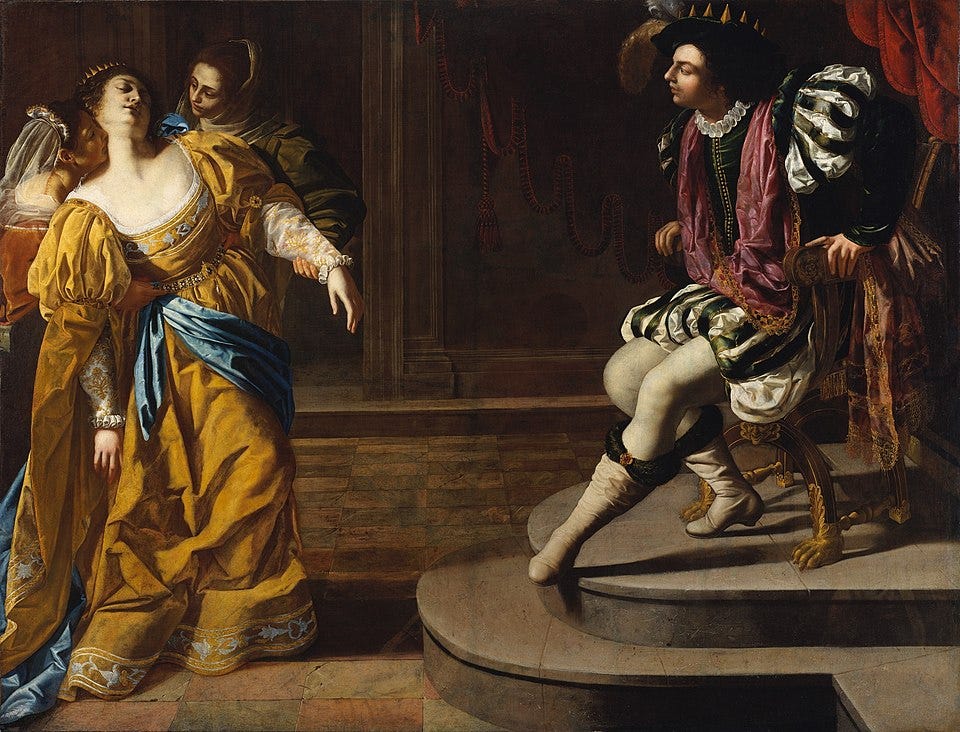
Her style reflects the influence of Caravaggio, with bold contrasts of light and dark and a focus on the human figure. But what sets her apart is how these figures act and feel. Gentileschi used gesture and facial expression not just to enhance the story, but to make it resonate on a deeply personal level.
Capturing Moments of Vulnerability
Gentileschi often captured moments of stillness and infused them with subtle emotion. In Mary Magdalene as Melancholy, the figure sits slumped in sleep, her head tilted and resting on her hand. Her pose looks awkward and uncomfortable, as if she drifted off unintentionally. This sense of unguarded fatigue gives the painting its quiet mood of melancholy and weariness.
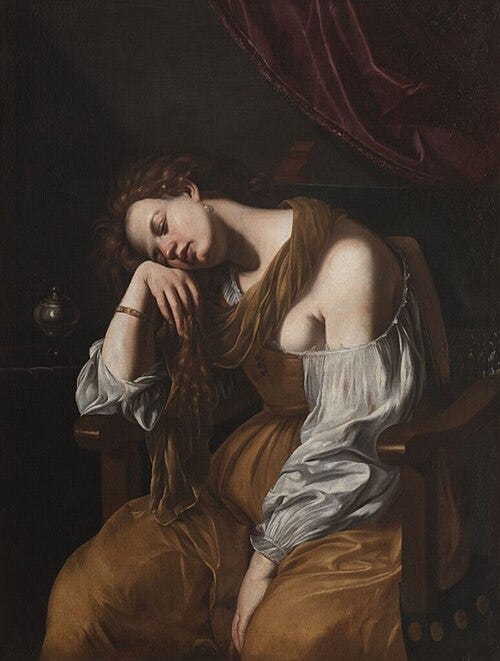
Unlike the dramatic or penitent Magdalene seen in many Baroque works, Gentileschi offers no spectacle. The atmosphere is dim, the palette subdued, and the figure appears withdrawn from the world around her.
Strength Conveyed Through Balance
In Self-Portrait as Saint Catherine of Alexandria, Gentileschi paints herself seated, richly dressed, and holding the symbols of sainthood. The textures of velvet, lace, and metal are carefully rendered, but they do not overpower the figure.
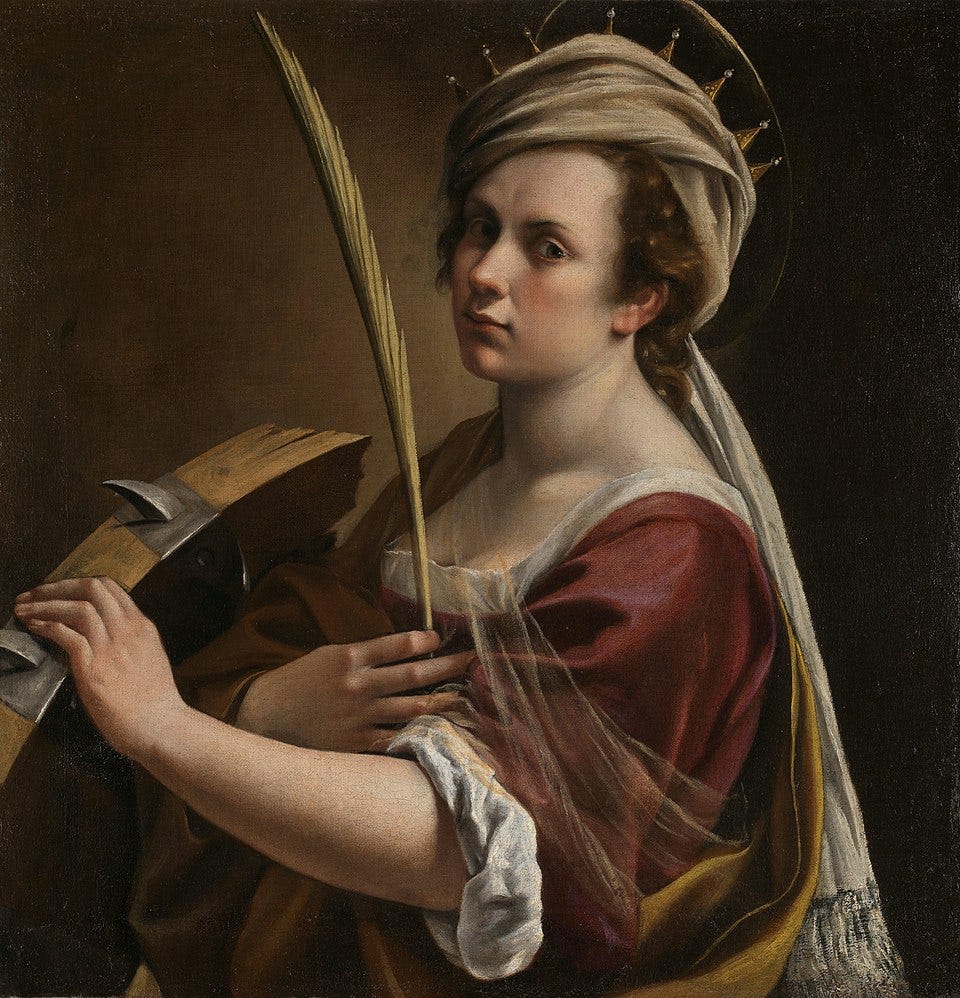
In this painting, Gentileschi’s gesture is restrained but purposeful. The light touch on the wheel and the slight lean of her body suggest balance, dignity, and composure.
Depictions of Calculated Violence
Gentileschi was just as skilled at capturing decisive action. Gentileschi returned more than once to the story of Judith, a Hebrew woman who infiltrated an enemy camp and killed the Assyrian general Holofernes. The tale comes from the Book of Judith, a dramatic text found in some Catholic and Eastern Orthodox Bibles, though it is not considered historical.
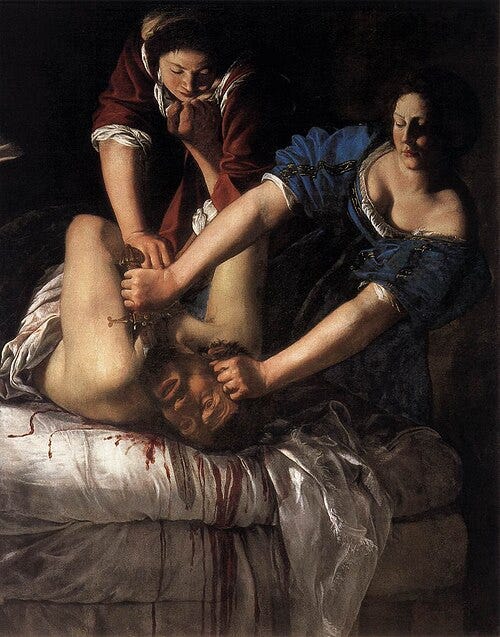
In Judith Slaying Holofernes (1611–1612), the murder itself is brought to the foreground. Judith and her maid restrain Holofernes as she drives a sword into his neck. The composition is stark and focused. Judith’s muscles are braced, her grip is steady, and her expression is cold and deliberate. There is no panic or passion, only precision. The scene feels less like an emotional outburst than a calculated execution.
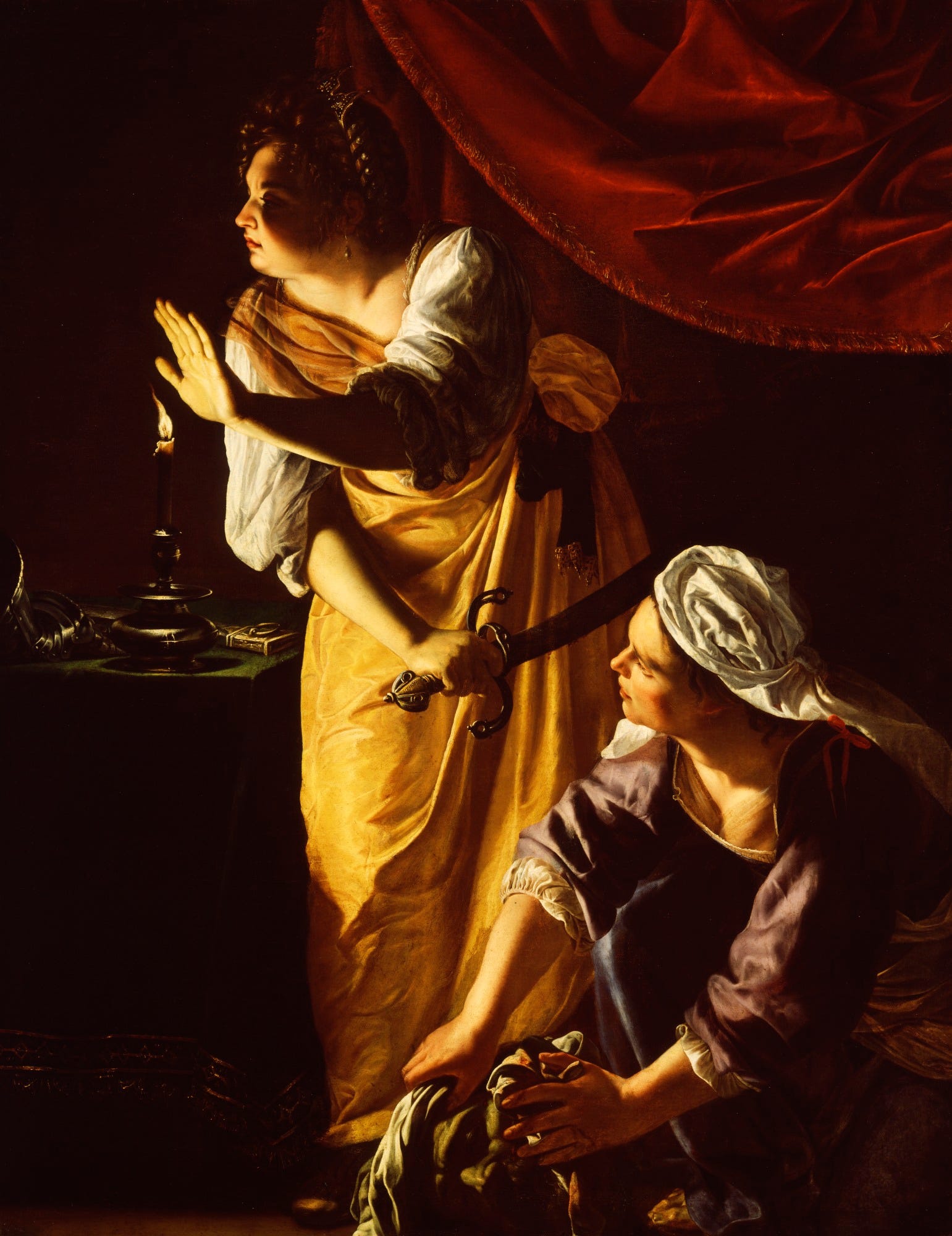
In Judith and Her Maidservant with the Head of Holofernes, the aftermath unfolds in a tense, enclosed space. Judith and her servant are in the act of concealing their victim’s head when something sets them on guard. The shadowy interior is theatrically lit by a single candle, casting long shadows across the fabric walls. The space feels boxed in, claustrophobic, as if danger presses in from all sides and the chance of escape is dwindling.
A Visual Language That Endures
Artemisia Gentileschi’s legacy lies in the clarity and depth with which she depicted the human form. She treated gesture and expression not as decoration, but as the structure of the scene. Her figures do not pose heroically. They are caught in motion, shaped by what is unfolding.
Each painting shows how gesture can carry meaning. Whether still or in motion, her figures reflect the pressure of their situation. With careful control, Gentileschi pushed Baroque painting beyond surface drama into something more focused and human. Her work resonates because every movement feels honest and real.