

In the early 1800s, Francisco Goya found himself surrounded by chaos. Spain was torn apart by war, first under Napoleon’s brutal invasion, then by civil unrest and political repression. Goya, who had once painted elegant portraits for the Spanish court, turned towards darker themes.
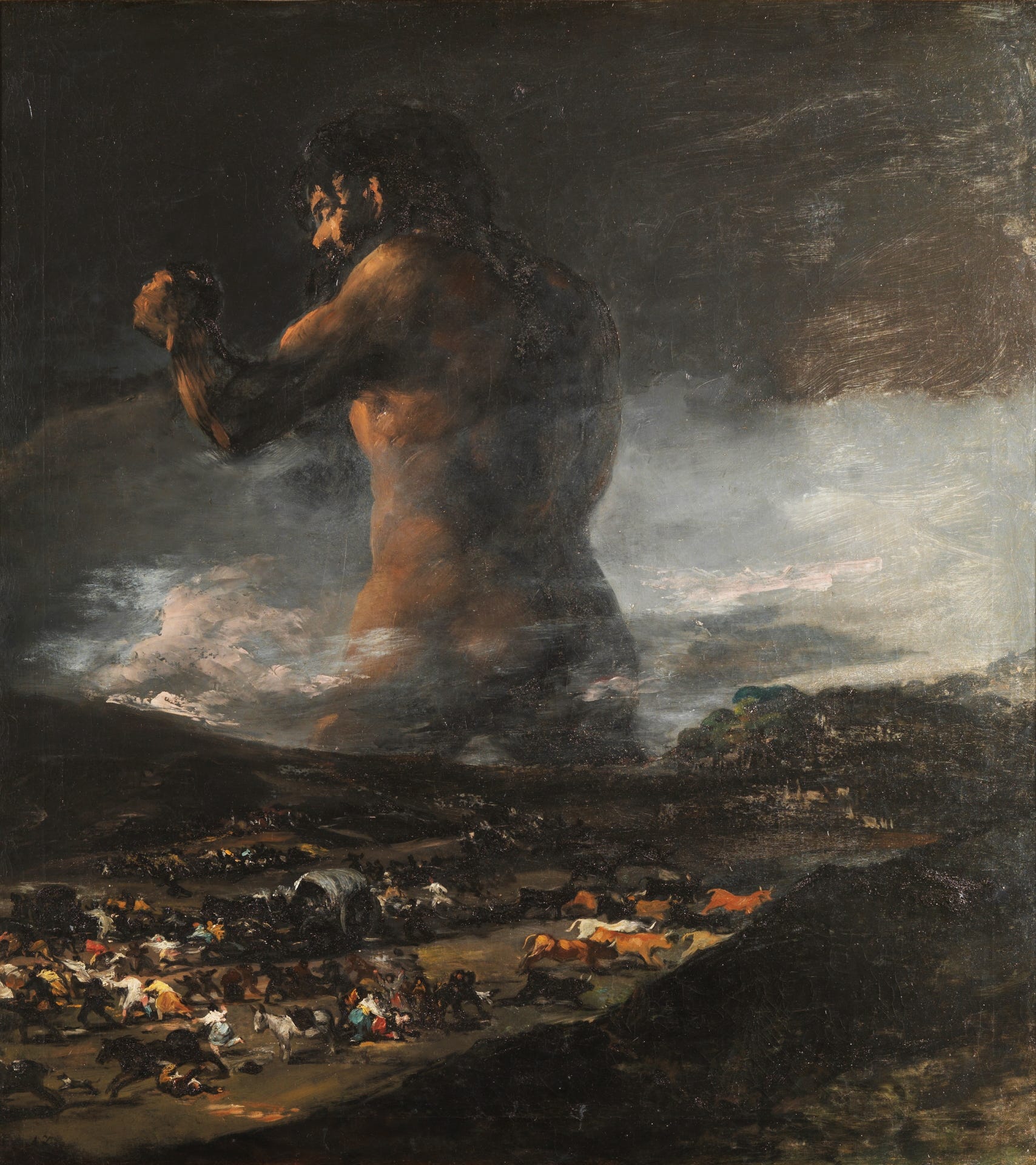
His late period work reveals a profound shift, mirroring the violence and instability of the world around him, as well as the torment within his own mind. What emerged from this dark time was a body of art that remains haunting and raw.
The horrors of war
Goya's The Third of May 1808 is one of the most well-known paintings from this period. It shows a group of Spanish civilians being executed by French soldiers, their faces lit by a lantern, frozen in expressions of terror and despair. The central figure, arms outstretched like a martyr, becomes a symbol of innocent suffering.
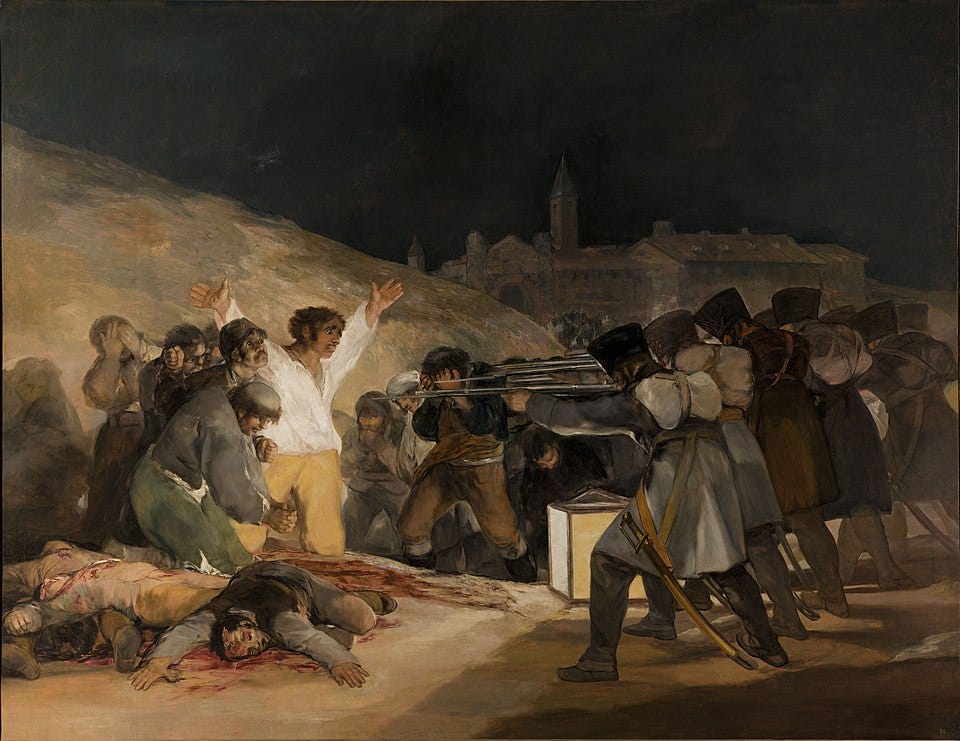
Goya did not glorify war. He revealed its brutality. This painting, along with the Disasters of War series of etchings, exposed the cruelty inflicted on both soldiers and civilians. These works were not published during his lifetime, since their message was too dangerous. However, they laid the groundwork for the later use of art as a form of protest.
A Retreat into darkness
As Goya aged, he became increasingly isolated. A serious illness had left him deaf, and disillusioned with politics and the corruption of those in power, he withdrew from public life. In his home just outside Madrid, known as the Quinta del Sordo or “House of the Deaf Man,” he began painting directly onto the walls. Once discovered, these were named the Black Paintings. They were private expressions of fear, anger, and despair.
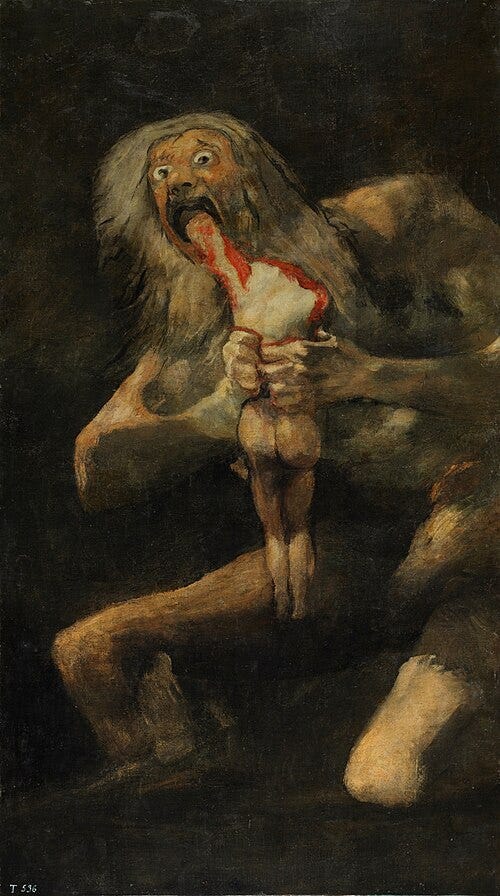
The series, created between 1819 and 1823, includes fourteen works, each disturbing in its own way. In Saturn Devouring His Son, the Roman god tears into the body of his child with wild eyes and bloodied hands: a moment of primal horror made brutal and immediate.
In Two Old Men Eating Soup, one figure looks menacingly over a bowl of unknown contents, whilst the other is already a skeleton. In A Pilgrimage to San Isidro, a procession of distorted figures stumbles forward, their faces twisted with exhaustion or delirium. The Dog shows a small animal nearly swallowed by a vast, empty space. These paintings break from traditional beauty and storytelling. They offer a glimpse into the mind of a man grappling with death, madness, and the collapse of everything he once believed in.


Vision and illness
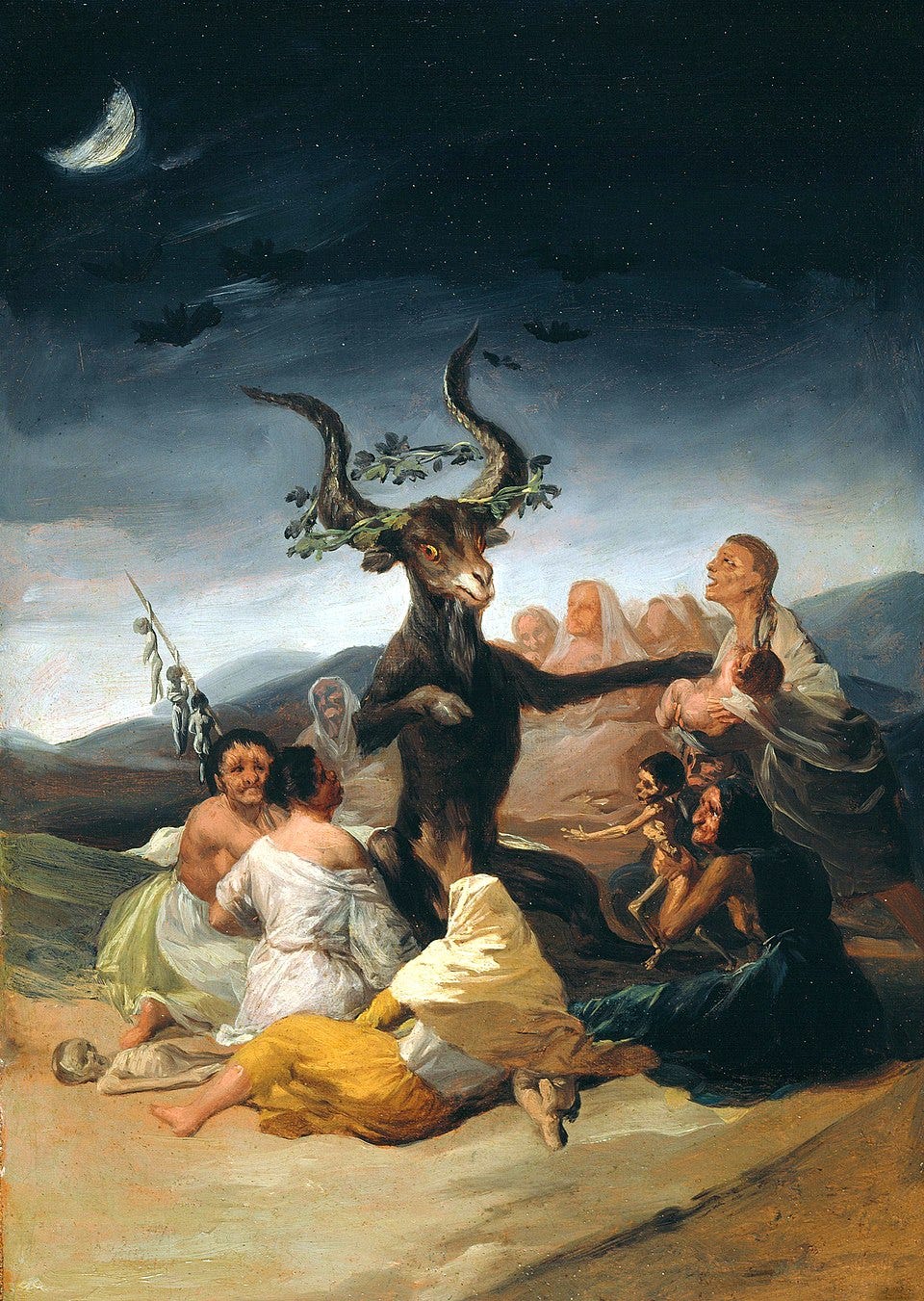
Some scholars believe that Goya suffered from lead poisoning, which can cause both hallucinations and mood disturbances. Others point to the trauma of witnessing the violence of the Peninsular War and the brutal political repression that followed. However, his Witches’ Sabbath (1797–1798) already foreshadowed the nightmarish tone that would define his later years. In it, a demonic figure presides over a gathering of witches. The scene is strange and unsettling, yet oddly theatrical.
A legacy carved from pain
Goya’s later works of art do not offer resolution or comfort. They are filled with unanswered questions, twisted figures, and nightmarish scenes. Yet they also represents a turning point in the history of art. Goya was not bound by the rules of beauty or decorum. His work anticipated the psychological intensity of Expressionism and the surreal distortions of modernism. He revealed that the act of creating art can allow us to bear witness to suffering, confront inner turmoil, and speak truths that words cannot.