

Jacques-Louis David, one of the most influential artists of his time, was not just a painter; he was a visual architect and a master who bridged the ideals of the French Revolution with the grandeur of Napoleonic Empire. His career traversed a remarkable evolution from being the artist of liberty to becoming the official painter of Napoleon Bonaparte’s court.
David's art tells the story of a man deeply intertwined with the political currents of his era. His shift from revolutionary patriotism to imperial ambition underscores the dynamic relationship between art, politics, and power during one of the most tumultuous periods in French history.
Art as Revolutionary Ideology
David’s early career was defined by a fervent commitment to the ideals of the French Revolution. As the Revolution tore through France, David sought to immortalize its heroes and principles. His great work, The Oath of the Horatii, set the stage for his future triumphs. This monumental painting depicted the Horatii brothers swearing an oath to defend their country, a scene that resonated with the revolutionary values of self-sacrifice and patriotism.
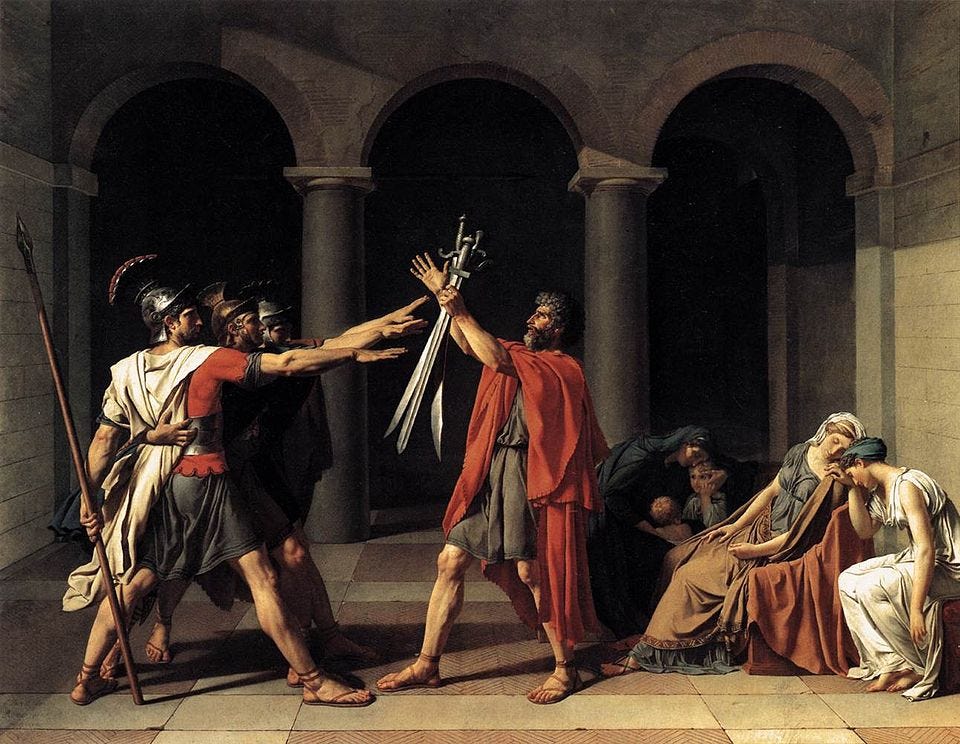
David’s use of strong, heroic lines and bold color underscored the power and significance behind the moment. This was not just history, but a call to arms, urging his contemporaries to embrace the revolutionary cause. The Oath of the Horatii became a symbol of the new era, one where art was not merely decorative but instrumental in shaping the collective feeling.
A Painter of the Revolution
As the French Revolution progressed, David’s role as its artistic representative deepened. His art took on a more explicitly political tone, aligning with the radical shifts occurring in French society. The Death of Marat, painted after the assassination of the revolutionary leader Jean-Paul Marat, exemplified David’s use of art to create political icons. Marat, shown in a moment of violent martyrdom, is depicted in an almost saintly manner, his death transformed into an emblem of revolutionary sacrifice.
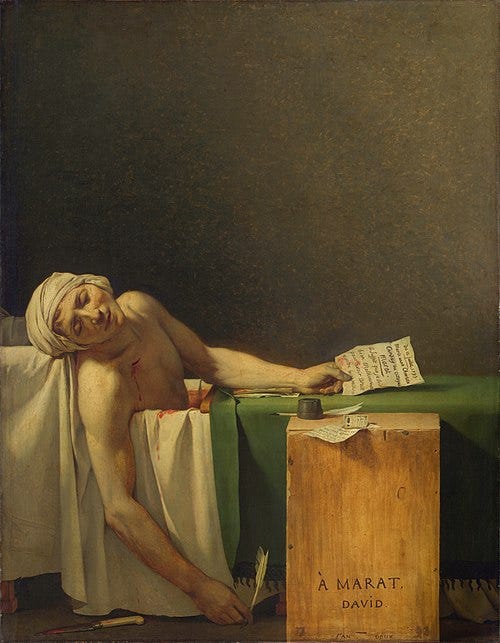
The simplicity of the composition, with its stark contrast of light and shadow, directs all focus to the figure of Marat, elevating him to a mythic status. This painting was not merely a memorialization of a fallen figure; it was an ideological statement.
Shifting Allegiances
The trajectory of David’s career took a dramatic turn with the rise of Napoleon Bonaparte. As France transitioned from revolutionary fervor to imperial rule, David adapted his style to reflect the new political realities. His embrace of Napoleon marked a pivotal moment in his life and work. David's painting Napoleon Crossing the Alps portrays the emperor not as a military leader engaged in a difficult struggle, but as a heroic, almost divine figure.
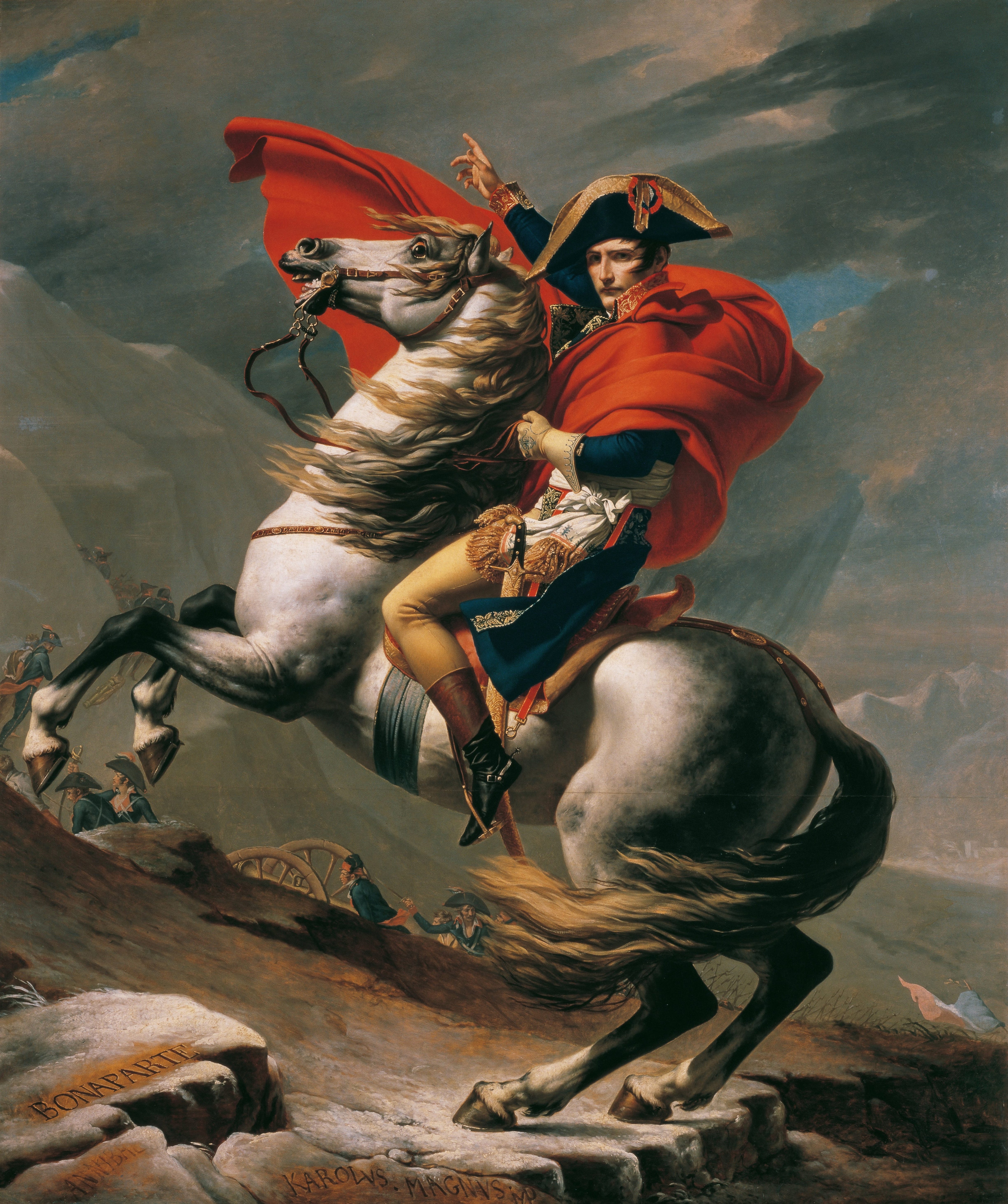
Here, Napoleon is shown riding a rearing horse, calm and unshaken, symbolizing his unyielding power. The grandeur of the composition, the dramatic pose, and the monumental scale of the painting all serve to elevate Napoleon to a near-mythical status. The shift in David’s style, from the harsh realism of the Revolution to the romanticized idealization of imperial power, reflected his changing political allegiance and his adaptation to the new order.
The Imperial Painter of a New Era
As Napoleon's empire expanded, David's role as the imperial painter grew even more significant. He was appointed court painter, tasked with immortalizing the grandeur of the Napoleonic court and its military victories. His monumental painting, The Coronation of Napoleon, depicts the moment when Napoleon crowned himself emperor in a lavish ceremony at Notre-Dame Cathedral.
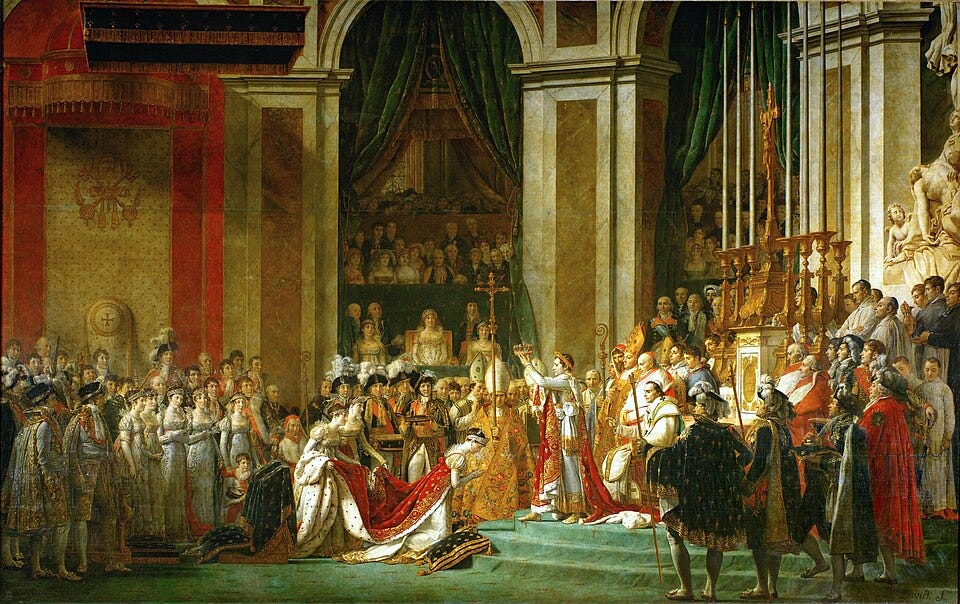
The painting is a grand spectacle of power and ambition, with Napoleon in the center, his crown held high, symbolizing his absolute authority. The composition is crowded with figures from history, including the pope, who is made secondary in the face of Napoleon’s self-coronation. Through this work, David presented Napoleon as the undisputed ruler of France, a leader who, like the great figures of antiquity, commanded the destiny of a nation.
A Life Defined by Transformation
Jacques-Louis David’s artistic journey, from revolutionary patriot to imperial painter, reflects the ever-changing tides of French political life. His early works, infused with the ideals of the Revolution, laid the foundation for his later transformation into the champion of Napoleonic power. Through his paintings, David captured not only the political shifts of his time but also the evolving role of the artist in shaping and reflecting those changes.
As a revolutionary and imperial painter, David’s work remains a testament to the deep connection between art, politics, and the shaping of collective memory.