

Léon Augustin Lhermitte was a French painter and draughtsman known for his powerful portrayals of rural life. Born in 1844, he emerged during the rise of Realism, a movement that shifted art’s focus from myth and grandeur to the ordinary and unassuming. Lhermitte stood out for his ability to bring emotional depth to everyday scenes, especially those of peasants working the land. He gave labor itself visibility and weight.
While many Realists leaned into confrontation or political critique, Lhermitte’s approach was more meditative. His scenes invite the viewer to pause and recognize the quiet dignity in working life. His figures do not strive for attention; they exist with gravity, rooted in a world of toil and endurance.
Honoring Labor Through Art
Lhermitte’s realism was grounded in observation. He spent time in rural villages, watching and sketching until he could build entire scenes from memory. In Pay Day for the Harvesters, field workers gather in a village to receive their wages. None of the postures are exaggerated, yet each one reveals something about the individual and the type of day they have experienced.
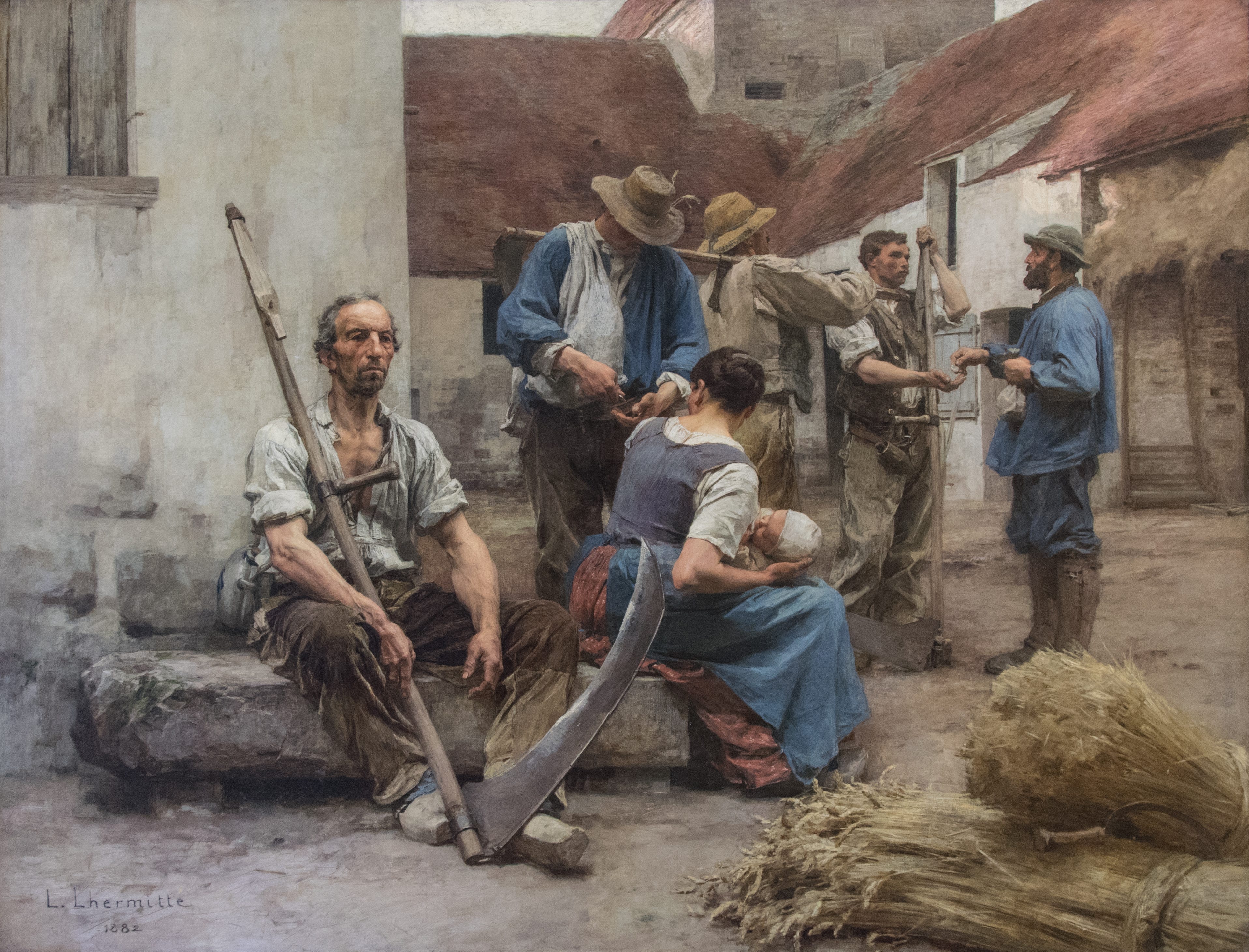
Nothing in the scene is invented for dramatic effect. The muted colors and worn clothing reflect the modesty of the setting. Lhermitte had an eye for the unspoken: the way the man with the scythe rests it against his body in the most natural position, and how the background figures stand with open, relaxed posture. These subtleties animate the stillness, making the captured moment feel lived and organic.
Depicting the Rhythms of Life
In The Grape Harvest, figures are scattered along a vineyard slope under soft light. A girl fills a basket with grapes, while others are in the process of delivering them. The workers blend into the land, creating a harmony and gracefulness.
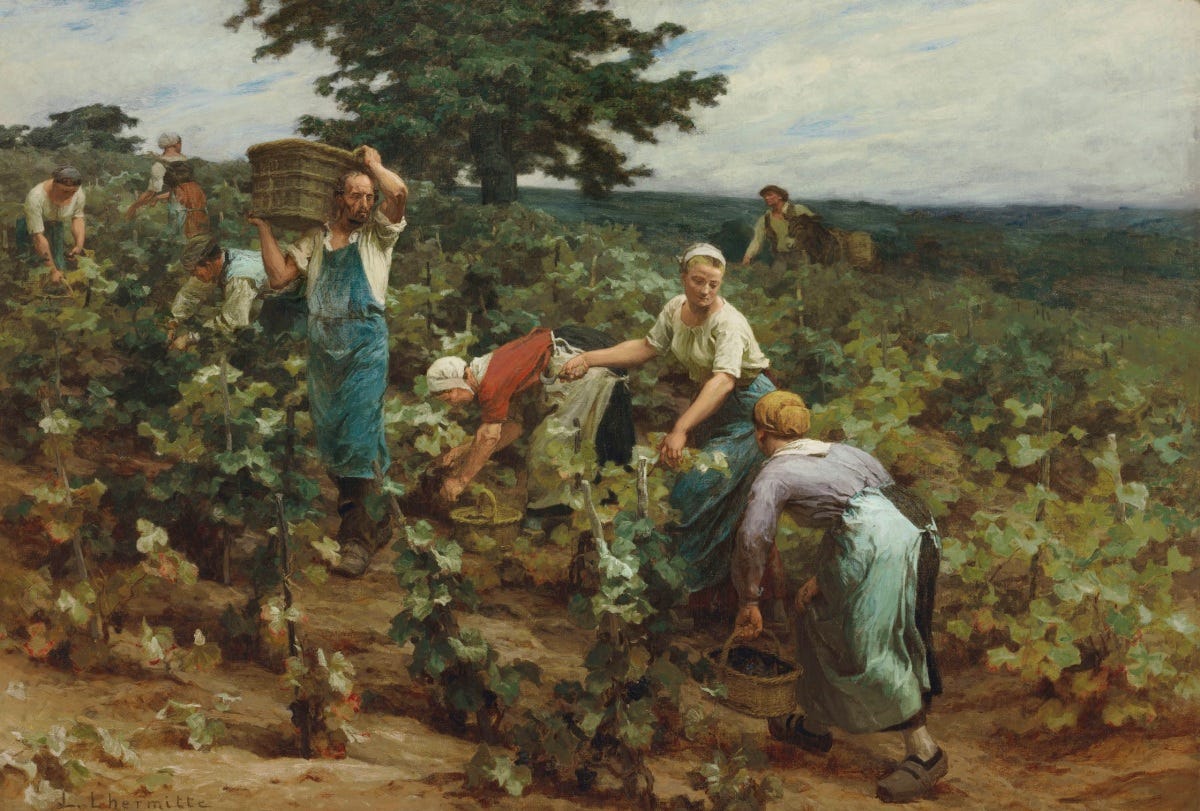
Browns, olives, and dusty golds dominate the palette, lit ambiently to reflect the overcast day. The lighting is subtle, emphasizing the ordinary. This is not a carefully selected moment with dramatic lighting, but a random snapshot of daily life.
Honoring Tradition and Ritual
In Procession near Ploumanach, a line of villagers walks in solemn formation toward a small church perched on a hill. Most of the figures are women, dressed in the traditional dark dresses and white coifs of the region. They move in quiet unison along a coastal path, some holding banners, others with hands clasped.
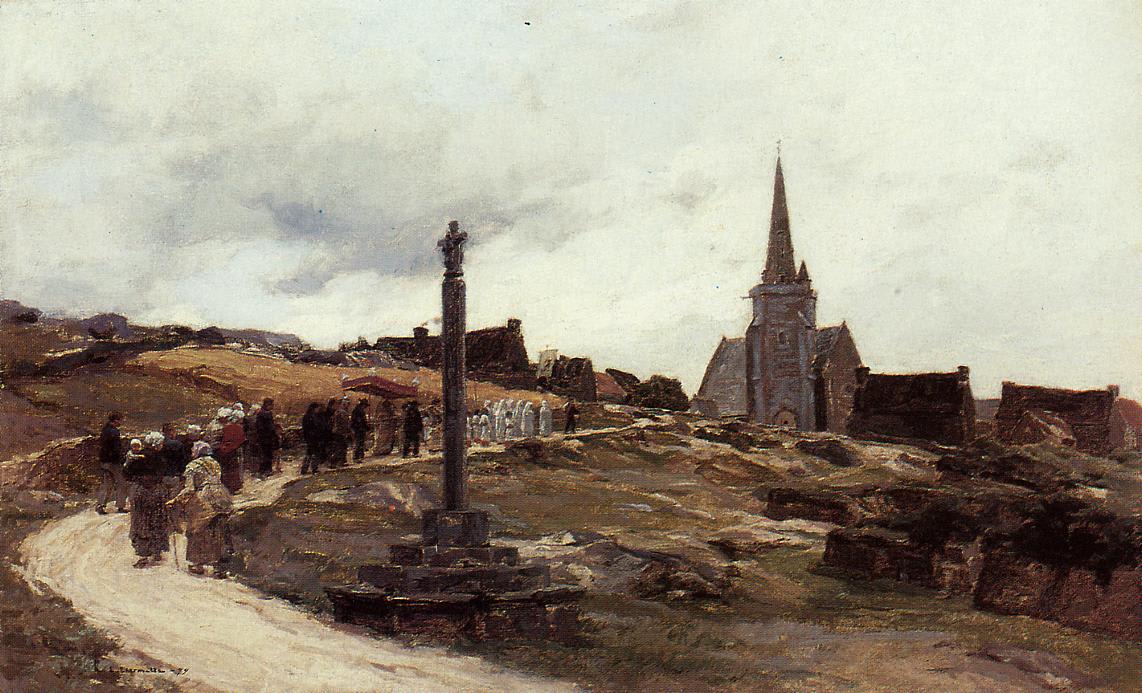
The light is cool, casting even illumination across the rugged terrain. Stone formations and rooftops line the hill, framing the procession and showing how the community has adapted to the landscape. The figures are grouped closely and follow the same path without deviation. They are unified by the church ahead, a common destination that embodies faith and ritual.
The Power of Stillness and Reflection
Lhermitte may not be as widely recognized today as some of his peers, but his work remains powerful. In an era dominated by spectacle, with everything vying for our attention, his paintings invite us to see the value of quiet contemplation and consistency.
What sets his work apart is his refusal to dramatize. He did not reshape life to fit the canvas. Instead, he used the canvas to contain life as it is, just long enough for us to see its meaning.