

Johannes Vermeer, a Dutch painter of the seventeenth century, is often admired for his tranquil interiors and careful handling of light. Though his body of work is small, comprising fewer than forty paintings officially, it offers lasting insight into how color can be used to elevate a scene with subtlety and intention.
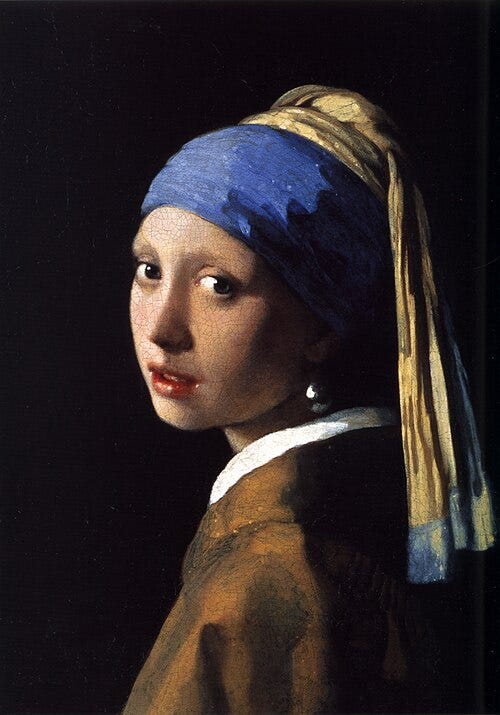
Vermeer’s use of a limited palette, focus on ambience, and precise placement of color reveal an underlying structure that continues to inform painters today.
Consistent Palettes and Harmonious Relationships
Vermeer often worked with a familiar range of pigments: ultramarine blue from lapis lazuli, lead-tin yellow, madder lake, and various earth tones. However, he was careful in how he combined them. In The Girl with the Wine Glass, the background, furnishings, and supporting elements are rendered in a restrained mix of warm browns, soft yellows, and neutral grays. These tones form a steady, unified area that anchors the composition.
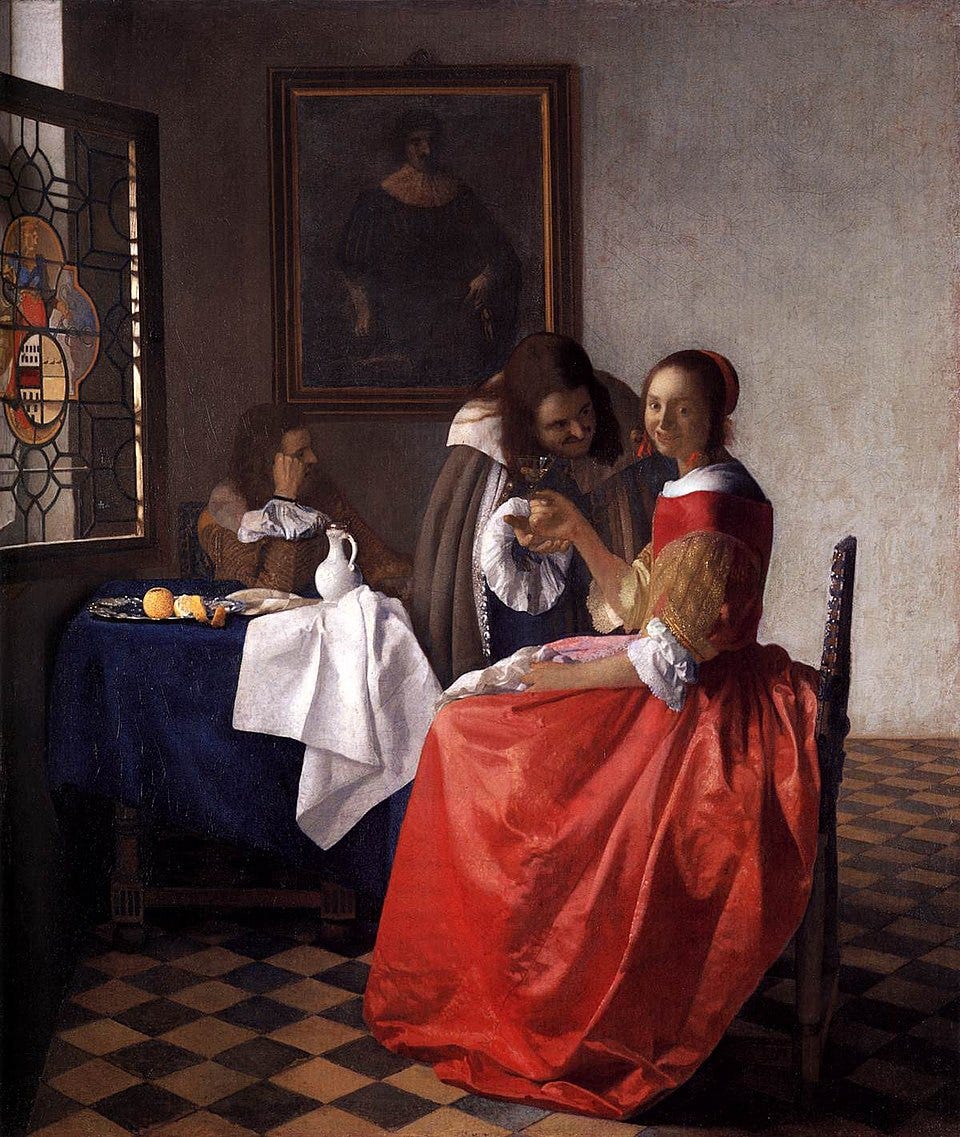
Against this calm backdrop, the vivid red of the woman’s dress becomes the clear focal point. Since the same muted colors are repeated behind and around her, the shift to red feels deliberate and meaningful.
This contrast is a key part of Vermeer’s approach. By grounding most of the scene in similar tones, he allows certain elements to carry weight without overwhelming the viewer. Taking from this style, we can build unity through background repetition, and reserve bold, saturated hues for the areas that are most important.
The Interaction of Color and Light
Vermeer’s understanding of color was inseparable from his treatment of natural light. He often illuminated his scenes from a window on the left, allowing daylight to soften edges and shift tones gradually across surfaces. These subtle transitions give his interiors both realism and atmosphere.
In The Milkmaid, the effect is especially pronounced. The yellow of the woman’s bodice appears bright and cool where it catches the daylight, then shifts into deeper, warmer tones in the shadows. Sunlight, especially when filtered through a window, tends to be cooler, while the shadows it creates can take on warmth from surrounding surfaces and reflected light. The folds of her blue apron, the crust of the bread, and even the glazed tiles on the wall all respond to this shared light source in slightly different ways, reinforcing the sense of cohesion within the scene.
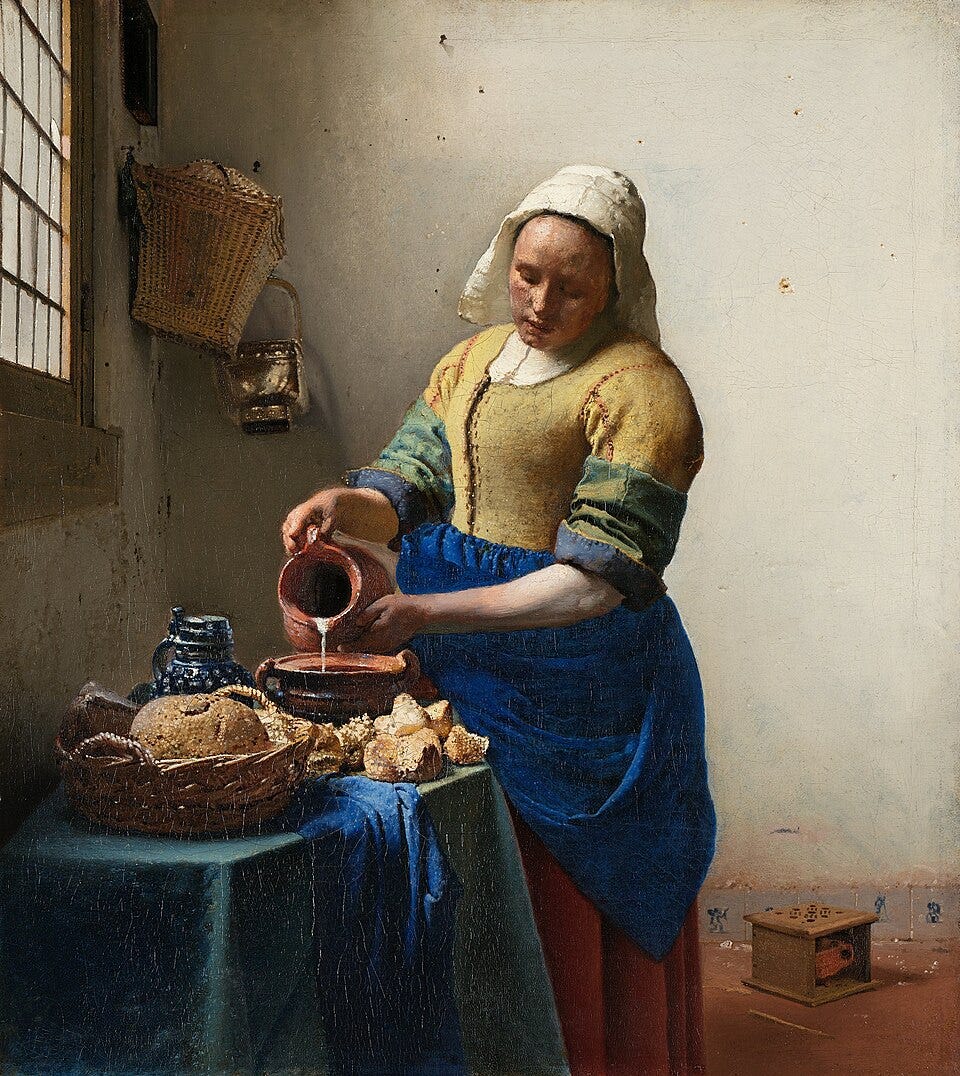
Color, in this sense, is not static. It shifts with light, context, and angle. This principle is central to color theory, and Vermeer’s work offers a reliable model. We can observing how cool light generally gives way to warm shadows, and use that rule of thumb to bring greater subtlety and realism to a scene. It encourages us to think in terms of relationships, rather than treating each color in isolation.
Color and Emotional Tone
While Vermeer’s compositions are carefully structured, their emotional tone is often shaped by color. He did not rely on expressive gestures or dramatic scenes to convey feeling. Instead, mood emerges from quiet harmony and balanced relationships between color and light.
In Woman Holding a Balance, the subdued palette and soft illumination create a sense of stillness and reflection. The woman lies within a context of grays, creams, and browns, only standing out because of the light catching her face. Even the highlights feel measured, contributing to the painting’s contemplative quality. This effect could have been undermined if he had used a red hue like in The Girl with the Wine Glass.


This shows that color choice affects more than just visual clarity. It influences how the viewer feels. By thinking beyond local color and considering the emotional effect of combinations, artists can shape the mood of a scene. A palette of cool, desaturated tones can create distance or quiet. Warmer tones can suggest intimacy or immediacy. Vermeer’s paintings offer a guide to how subtle color harmonies can carry emotional weight without overt expression.
Practical Lessons in Restraint and Clarity
Vermeer’s paintings are built on a foundation of limited pallets used intelligently. Colors are not merely decorative. They serve a function: structuring a space and directing the viewer’s attention.
These strategies are not limited to oil painting or historical technique. They apply broadly across media. A thoughtful palette and purposeful contrast can bring order and depth to all kinds of visual work. Vermeer’s interiors capture stillness, but they feel honest and alive.