

You are standing at the edge of a cliff, salt wind in your face, the sky darkening with a furious storm. Below, the sea roars with elemental power, vast, untamed, and indifferent. Something in your chest tightens, a fusion of fear and wonder. This is the sublime. A sensation not merely of beauty, but of overwhelming magnitude, where terror and awe converge into a kind of ecstasy.
Such moments defined the Romantic spirit. Emerging in the late 18th century as a response to the Enlightenment’s rationality and the Industrial Revolution’s mechanization, Romanticism was a movement centred around emotion. Where neoclassicism prized restraint and harmony, Romanticism sought to unchain the soul through its poetry, music, and painting. Romantic artists turned inward to the realm of dreams, nightmares, and human passion. And outward, to the stormy, violent wildness of nature.
Portraying the Power of Nature
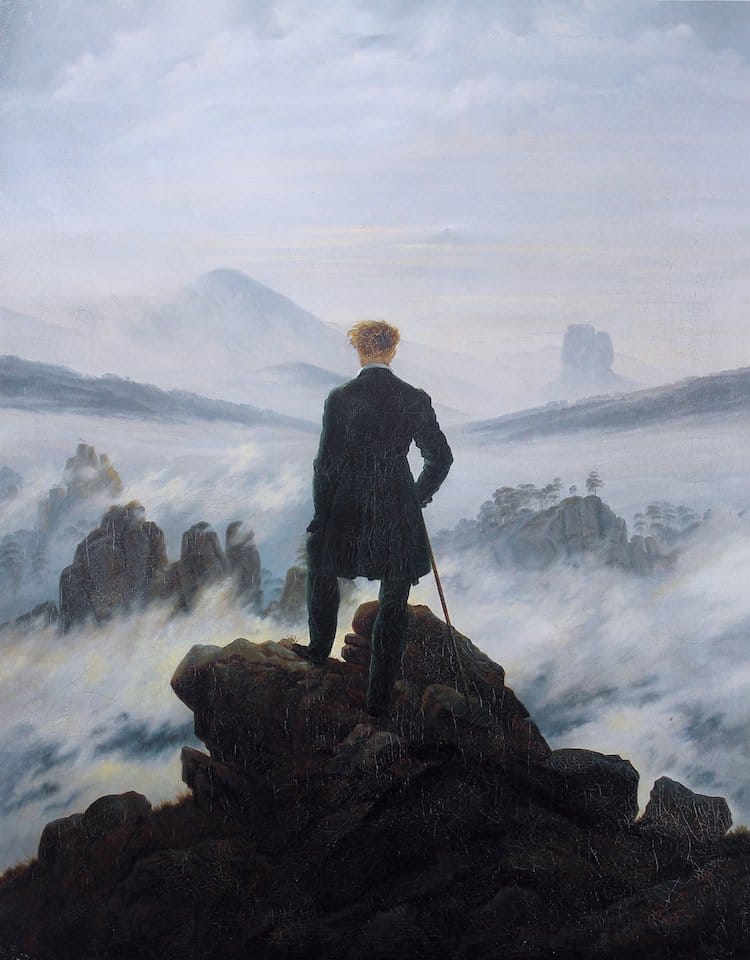
Romantic painters viewed nature as the most significant part of the painting. The natural world was seen as a vast, untameable force. At times it was a source of solace, at others a terror beyond comprehension. In Wanderer Above the Sea of Fog (c. 1818), Caspar David Friedrich depicts a lone figure surveying a mist-shrouded landscape. The man’s back is to us, inviting the viewer to inhabit his solitude. The fog evokes mystery through lost edges, and the mountain peaks rise like ghostly islands from an ocean of uncertainty.
J.M.W. Turner rendered a more chaotic piece in Snow Storm: Steam-Boat off a Harbour’s Mouth (1842). A lone steamboat struggles against a furious blizzard, nearly consumed by a vortex of wind, water, and snow. The scene dissolves into whirling motion, with barely any solid form to grasp. Turner famously claimed he had himself lashed to a mast during a storm to witness such chaos firsthand. In this painting, the mechanical vessel, symbol of modern progress, appears fragile and overwhelmed, swallowed up by a power far greater than itself. Here, Turner brings out the indifference and destructive potential of nature.

Inner Turmoil and Obsession
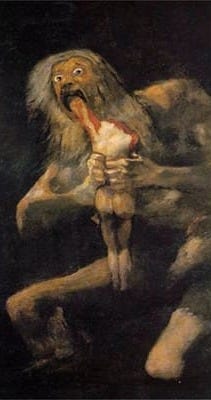
Romanticism also marked a voyage inward. Artists explored madness, longing, and death with an intensity that bordered on obsession. Spanish painter Francisco Goya captured this psychological abyss, still haunting viewers today. His Saturn Devouring His Son (c. 1819–23), part of the Black Paintings series, shows the mythic god tearing into his child, eyes wide with primal frenzy. Goya’s world is one of shadows, of power descending into savagery.
Delacroix, the French Romantic master, conveyed another kind of turmoil: the raw, physical struggle between man and nature. In The Lion Hunt (1858), chaos unfolds in a flurry of hooves, claws, and raised weapons. Hunters on horseback clash with ferocious lions, their bodies twisted in motion, their faces locked in grim determination or panic. The composition spirals with energy, filled with tension and movement. Delacroix does not offer neat heroism. Instead, he immerses the viewer in a violent ballet, where survival and savagery are inseparable.

Confronting Tragedy and Collapse
Romanticism was not only a celebration of awe and beauty, but a reckoning with collapse. Beneath its soaring visions lay darker currents of grief, injustice, and inner torment. As the heroic ideal fractured, artists turned toward catastrophe, confronting moments when civilization failed and the human soul was laid bare.
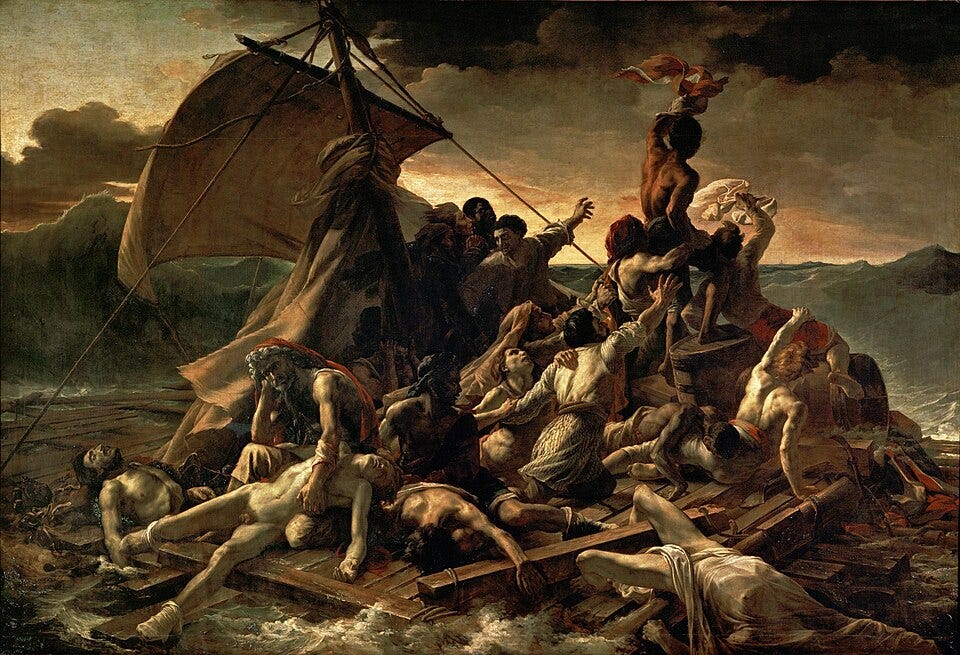
Géricault’s The Raft of the Medusa (1818–19) is perhaps the most enduring Romantic tragedy. Based on a real shipwreck, the painting depicts a raft of survivors adrift in open sea, their hope flickering. This is no heroic triumph. It is a vision of desperation and dwindling hope. Nature and fate conspire to crush the human spirit.
Echoes in the Modern Day
Romanticism still influences modern thought and culture. Its focus on deep emotion, powerful landscapes, and individual experience continues to influence how we make and understand art. Romanticism taught us to value nature’s raw beauty, human vulnerability, and the complexity of our inner lives. It encourages us to look closely at fear, grief, and longing, instead of hiding from them. This outlook still resonates today. We are drawn to stories, images, and music that stir something deep inside us. Romanticism invites us to feel more, not less. To stand at the edge of the unknown, and face it with courage.