

In the middle of the 12th century, as feudal lords waged war and monks sang prayers for peace, a new form of expression began to rise from the cities of northern France. Towering cathedrals were built as sanctuaries from conflict, standing above the chaos of the age. They reached skyward, taking the viewer with them. This was the birth of what would later be called “Gothic” period. The term was coined during the Renaissance by critics who viewed medieval architecture as crude and alien, invoking the barbarian Goths who had once overrun Rome. In modern times, this view has been reversed, and most celebrate their creations.
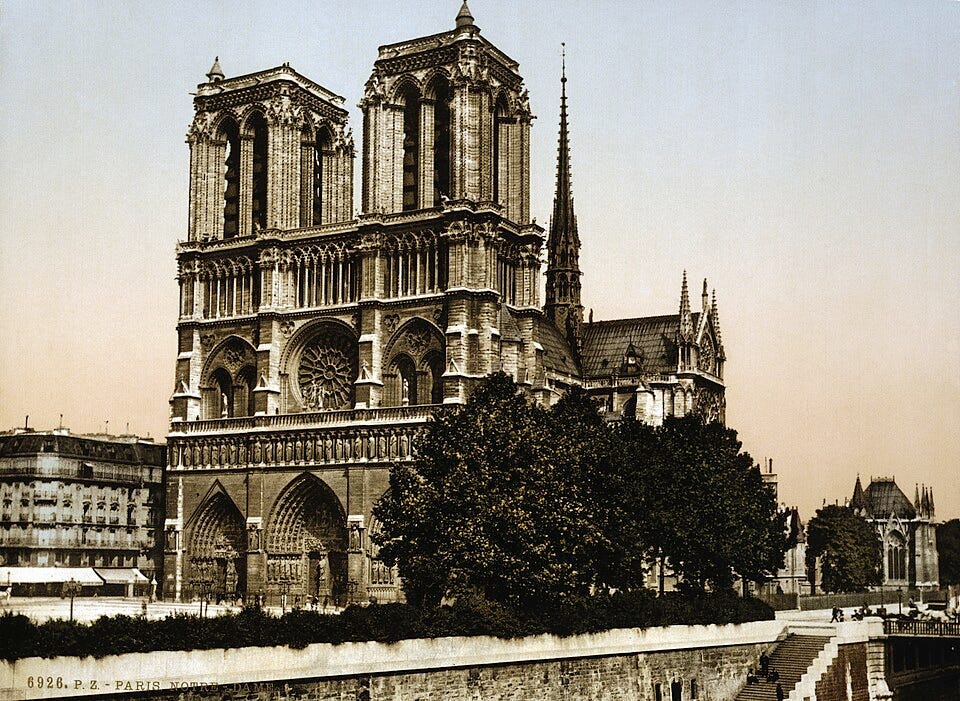
Gothic art fused spiritual devotion with technical ingenuity. It was deeply Christian, yet unmistakably human, seeking not only to instruct but to uplift. At its heart was light, both physical and symbolic. Through stained glass and sculpted stone, it imprinted visions of the divine into the very structure of its sacred buildings.
The Divinity in the Gothic Cathedral
The most iconic expression of Gothic art was the cathedral. These monumental buildings were designed not simply to house congregations, but to manifest the glory of God on Earth. To achieve this, medieval builders transformed architecture into a spiritual experience.
The key was verticality. Soaring pointed arches and graceful supports built outside the walls carried the weight of the structure, allowing the walls themselves to become thinner and taller. This opened the way for vast interiors that seemed to defy gravity. The nave of Amiens Cathedral rises over 40 meters into the air, while Chartres stands like a stone forest lifted in prayer. Every detail points upward, a quiet metaphor for divine ascent.
Light was another major focus. Tall stained-glass windows filled cathedrals with kaleidoscopic color, casting biblical scenes onto walls and faces. As sunlight passed through these vibrant panels, it turned ordinary space into sacred spectacle. For the medieval peoples, this was a revelation of divine presence. God made manifest through light.
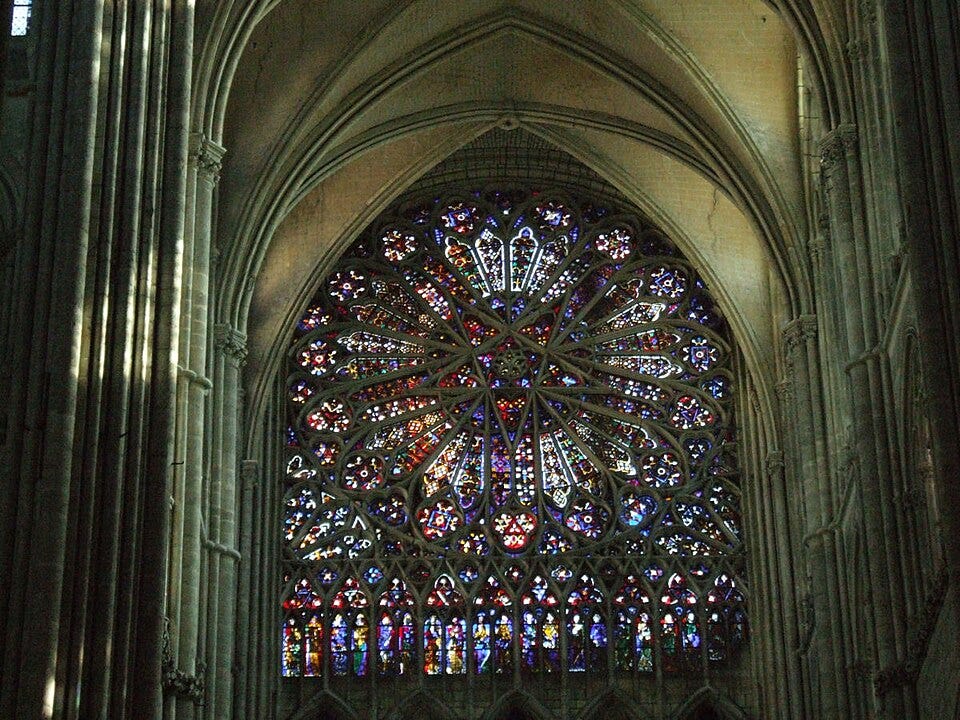
How Buildings Were Transformed Into Scripture
Gothic cathedrals did not only teach through sermons. Their stone walls were decorated with engravings, especially around entrances known as portals. This meant part of the buildings themselves became narrative devices, containing biblical stories, saints, and monsters.
Within the Chartres Cathedral, elongated figures of prophets and kings stand beneath canopies to form columns. Their gestures are restrained, their gazes distant, yet their stillness speaks of eternal truths. These were not just reflections of people, but aimed at revealing heavenly order.
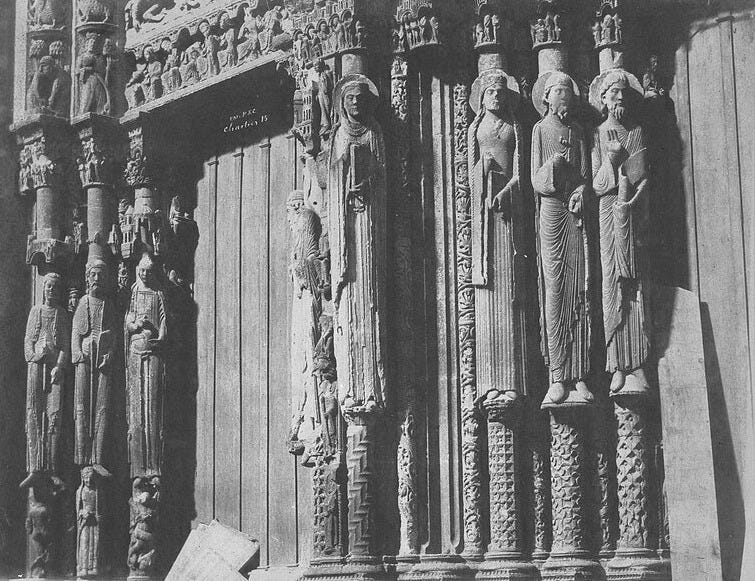
Gothic sculptors moved beyond the stiffness of earlier Romanesque works in favor of grace and rhythm. Figures twist gently. Draperies ripple like fabric in wind. Over time, realism deepened. By the late Gothic period, faces became expressive, bodies more naturalistic, and emotion became a priority.
The World Illuminated on the Page
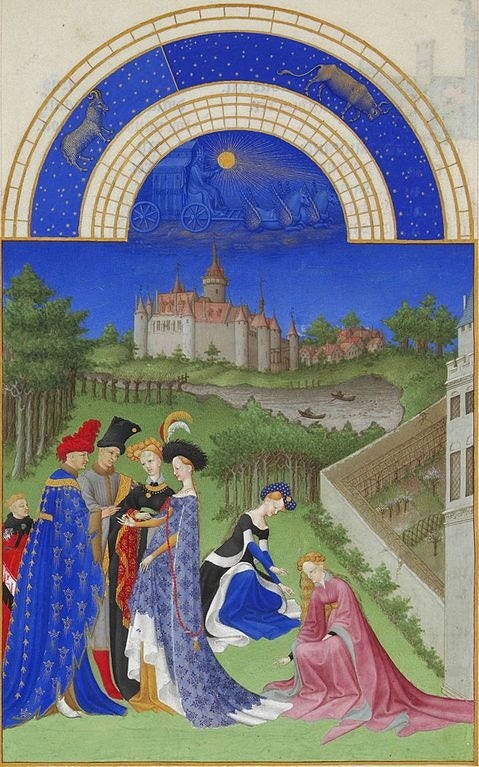
In the Gothic age, painting flourished alongside architecture and sculpture. One of its forms was the illuminated manuscript. These hand-crafted books were filled with vivid colors and shimmering sheets of gold.
Among the most celebrated examples is the Très Riches Heures du Duc de Berry, a richly decorated Book of Hours. Its pages reveal glimpses of medieval life: feasts under blue skies, harvests in golden fields, and scenes of courtly love.
During this same period, panel painting began to flourish, especially on wooden altarpieces. These works shared the ideals of Gothic art: elongated grace, spiritual depth, and radiant color. But they also introduced a new focus on emotional realism. Faces grew more expressive. Sacred figures were shown not only in majesty, but in sorrow, tenderness, and quiet contemplation. This marked a turning point. Faith was no longer portrayed only through grandeur, but through the intimate language of human feeling.
A Final Reflection
Gothic art arose from a society longing to bring heaven closer to earth. It sought to express the mysteries of faith not only through doctrine, but through stone, glass, and paint. In cathedrals such as Reims, Strasbourg, and Notre-Dame de Paris, the physical world was shaped to reflect a spiritual purpose. Arches soared, windows glowed, and every detail worked to guide the soul upward toward the divine.