

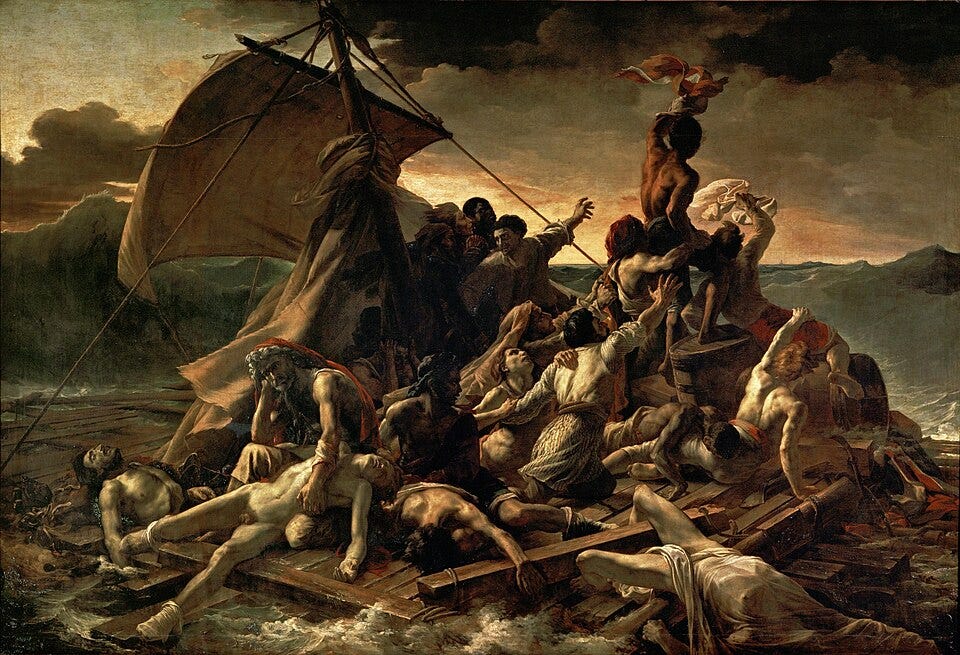
Théodore Géricault painted with the intensity of someone who saw too much and could not forget. He lived in the aftermath of Napoleon's fall, when institutions were crumbling and ideals gave way to disillusionment. While many artists turned toward dreams or nostalgia as an escape, Géricault turned toward chaos. His art is filled with wreckage, despair, and systems at their breaking point. He did not try to escape the modern world, but faced it head on.
A Life Shaped by Conflict
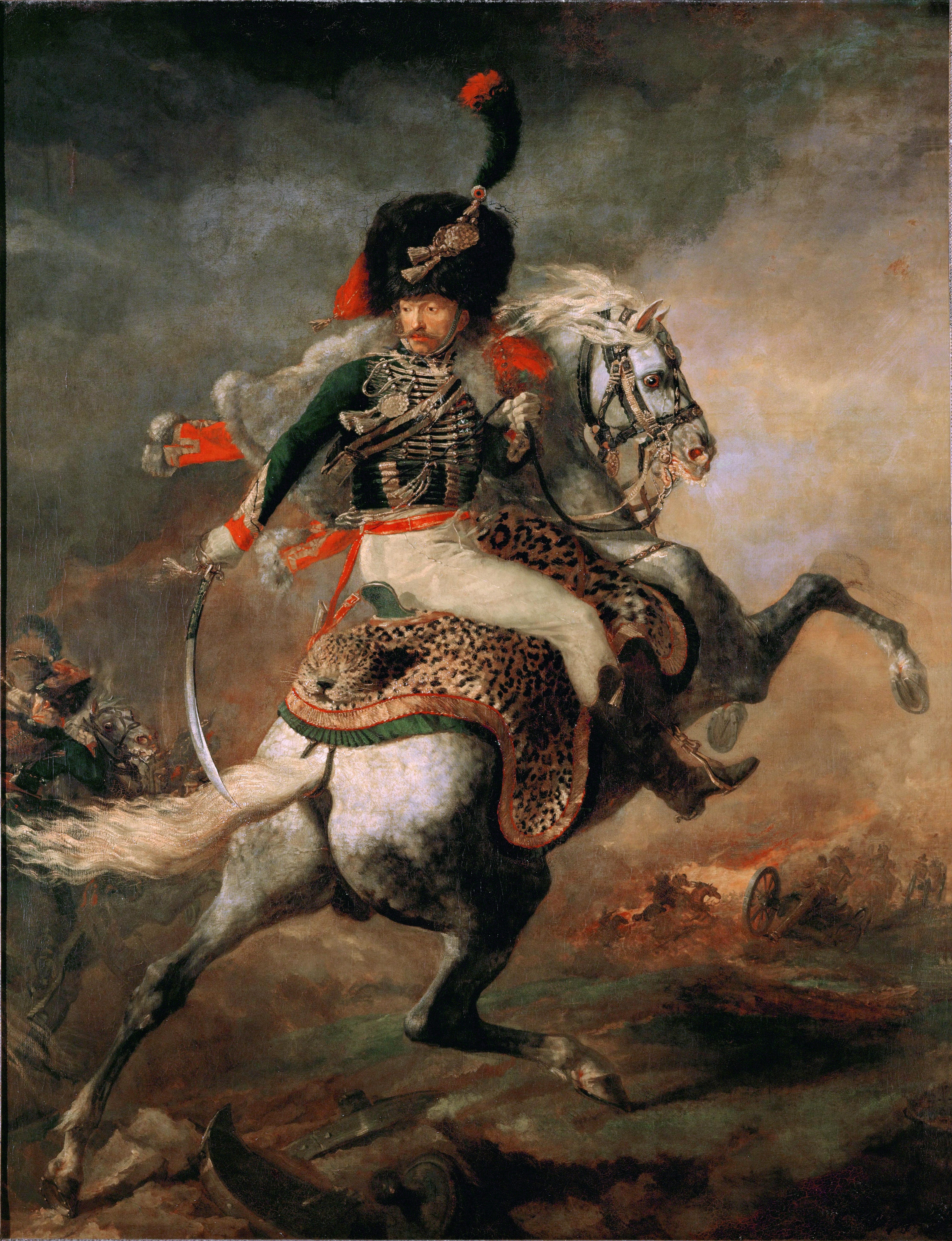
Born in 1791 into a wealthy family, Géricault was trained in classical technique but quickly began to push against its limits. He admired Rubens and Michelangelo for the vitality of their art. His early painting The Charging Chasseur shows this shift already underway. Rather than idealized heroism, the scene is unstable and violent. The horse rears in shock, the central figure twists awkwardly in his saddle, and the battlefield disappears into smoke. Géricault was not interested in neat conclusions.
Psychology Revealed Through Paintings
Géricault’s later work focused on those society preferred to ignore or forget. His portraits of psychiatric patients reveal quiet faces caught in invisible storms. Each painting is titled only by the diagnosis, such as Monomania of Envy. The expressions are subtle, and difficult to read. They are unsettling because they feel real.


Alongside these portraits, he created studies of severed limbs, corpses, and morgue anatomy. These were not for shock. They were part of his search for truth. The body, for Géricault, was not just a subject of beauty. It was a record of one’s life struggle. Every bruise, scar, or distortion told a story about what it meant to live in a violent world.
A New Kind of Romanticism
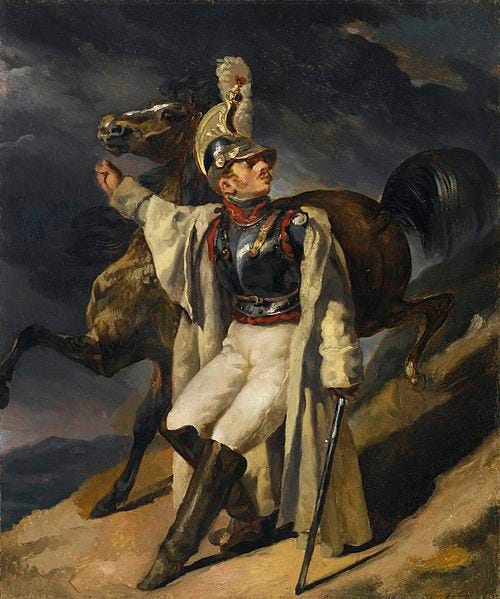
Géricault strongly grounded his art within reality. He sought out eyewitnesses, interviewed survivors, and constructed full-scale models in his studio. Whether depicting a battlefield, an asylum, or a morgue, he worked from life. His brushwork was bold and energetic, but always anchored by careful observation. In The Wounded Cuirassier (1814), he portrayed a soldier not in heroic charge, but in retreat, dismounted and cautious. The piece captures a moment of uncertain survival and personal defeat, without making any clear judgement.
Unlike many of his contemporaries in the Romantic movement, Géricault did not turn inward or seek transcendence in nature. Where Caspar David Friedrich painted fog-bound landscapes filled with silence and longing, Géricault focused on the human body and its physical toll. He saw no need to idealize. For him, art was not a refuge from the world but a tool to face it head-on, with clarity, force, and compassion.
Gericault’s Powerful Legacy
Géricault died at thirty-two. His health had been worn down by riding accidents, illness, and relentless ambition. Yet in that brief time, he changed the direction of French painting. His influence is visible in Delacroix, Courbet, and later in the documentary realism of photography.
He gave Romanticism weight and substance. He showed that beauty could come from collapse, that truth could be physical, and that art had a role to play in the moral questions of the age. Géricault did not paint to comfort. He painted to confront.